Clinical EFT & Energy Psychology
For anxiety, fears & phobias, trauma, stress, pain and the emotional patterns that keep you stuck.
You may understand exactly what's happening intellectually — but that doesn't always mean your body, emotions and nervous system have caught up.
I use Clinical EFT (tapping) and an integrative Energy Psychology approach to help you work with the thoughts, emotions, memories, physical sensations and protective patterns connected to what you're experiencing.
Whether you're dealing with anxiety, a specific fear, a difficult past experience, burnout, pain, self-doubt — or you're struggling to be fully seen and heard — we start with what's happening for you now.
Online sessions · Worldwide · Free introductory call

You can understand something and still feel completely different underneath.
You may know exactly why you react the way you do.
You may have talked about it, read about it, analysed it, tried to change it or even convinced yourself that you should be over it by now.
And yet your body still reacts.
You still feel the knot in your stomach before a difficult conversation.
Your mind keeps running through every possible outcome.
You know the fear isn't rational, but your body doesn't seem to know that.
You keep putting something off.
You feel exhausted from holding everything together.
Or you find yourself shrinking, second-guessing or staying quiet when part of you wants to speak up.
Understanding matters. But sometimes understanding isn't enough to change the response.
This is where we can work differently.
What brings you here?
You don't need to know the perfect explanation.
You might simply know that something isn't working the way you want it to.

Anxiety & Overwhelm
For persistent worry, racing thoughts, panic, anticipatory anxiety, overthinking or feeling constantly on edge.
Fears & Phobias
For specific fears and phobias — from flying and heights to needles, medical procedures, driving, public speaking or particular situations.
[Explore EFT for fears & phobias →]
Trauma & Difficult Experiences
For distressing experiences that continue to affect you emotionally or physically, including experiences that still trigger a strong response long after they happened.
[Explore EFT for trauma & difficult experiences →]
Stress & Burnout
For people who have been carrying pressure for too long and are finding it increasingly difficult to switch off, rest or recover.
[Explore EFT for stress & burnout →]
Pain & Physical Symptoms
For the fear, frustration, stress and emotional distress that can accompany living with pain or other physical symptoms — alongside appropriate medical care.
[Explore EFT for Pain & Physical Symptoms →]
Self-Doubt & Confidence
For feeling not good enough, second-guessing yourself, perfectionism, imposter feelings, fear of getting things wrong or struggling to trust your own decisions.
[Explore EFT for Self-Doubt & Confidence →]
Grief & Emotional Processing
For grief, loss, disappointment, anger, guilt, endings and experiences that still feel emotionally unfinished.
[Explore EFT for Grief & Emotional Processing → ]
Visibility & Self-Expression
For speaking up, difficult conversations, fear of judgement, public speaking, taking up space and the feeling that being seen somehow isn't safe.
When your mind knows one thing but your body is telling you another.
You can know you're safe and still feel anxious.
You can know you're capable and still feel like you're not good enough.
You can know the past is over and still feel completely activated by something in the present.
You can know what you want to say and still find yourself unable to say it.
These responses aren't necessarily a sign that you haven't thought about the problem enough.
They can involve learned emotional responses, memories, beliefs, physical sensations and protective patterns that operate outside conscious reasoning.
Clinical EFT gives us a practical way to work with those responses rather than simply trying to think your way out of them.
A grounded, individual approach.
Clinical EFT is the foundation of my practice.
We use gentle tapping on specific acupoints while bringing attention to the thoughts, emotions, memories, sensations or situations that are relevant to you.
But there isn't a single script for every client. Depending on what we're working with, I may also draw on:
Nervous-system awareness
Noticing activation, settling and the physical responses that accompany emotional experiences.
Somatic awareness
Using what you notice in your body as useful information rather than something to ignore or override.
Parts and inner-child work
Exploring different protective responses, younger experiences or conflicting needs where these are relevant.
Matrix Reimprinting
A related approach that builds on EFT and can be useful when earlier emotionally charged experiences are connected to what's happening now.
Creative visualisation
Using imagination and internal representation where this supports the work.
The aim isn't to fit you into a particular method.
It's to understand what you're experiencing and use the approach that is right for you.
EFT, or tapping, is more than just positive thinking.
Clinical Emotional Freedom Techniques (EFT) is a structured approach that combines cognitive and exposure-based elements with gentle tapping on acupoints.
In practice, we bring attention to a particular issue while using tapping to work with the emotional and physical response connected to it.
This might be:
a fear
a memory
a recurring thought
a physical sensation
a situation you keep avoiding
something you feel anxious about
a belief about yourself
or a response that seems disproportionate to what's happening now.
Clinical EFT has been investigated in randomised controlled trials and systematic reviews across areas including anxiety, phobias, PTSD and stress, with research also exploring pain and other physical symptoms.
The strength of evidence varies depending on the issue, and EFT should be understood as a complementary approach rather than a replacement for appropriate medical or psychological care.

What happens in a session?
Firstly, you get to choose the chair you sit in.
Our sessions can be from the comfort of your own home, on the sofa or in a comfortable chair, or you can come and see me in person. Most clients prefer to be at home for convenience and ease but I always have some people who prefer in person sessions - it’s up to you.
You don't need to know exactly what's wrong before you book.
We begin with what's happening for you now.
I'll ask questions to understand the issue, what you notice emotionally and physically, and what you'd like to be different.
From there, we'll identify something specific to work with.
You might notice:
A thought
"I'm going to get this wrong."
An emotion
Fear, anger, sadness, shame, frustration or overwhelm.
A physical sensation
A tight chest, knot in your stomach, racing heart, heaviness, tension or something else.
A memory
Something that happened recently or much further back.
A situation
A conversation, appointment, flight, presentation, relationship or decision you're facing.
We work with what comes up rather than forcing a particular outcome.
As the emotional intensity changes, we can explore what else is underneath it and what becomes possible from there.
You don't have to perform, explain everything perfectly or have it all figured out before you arrive.
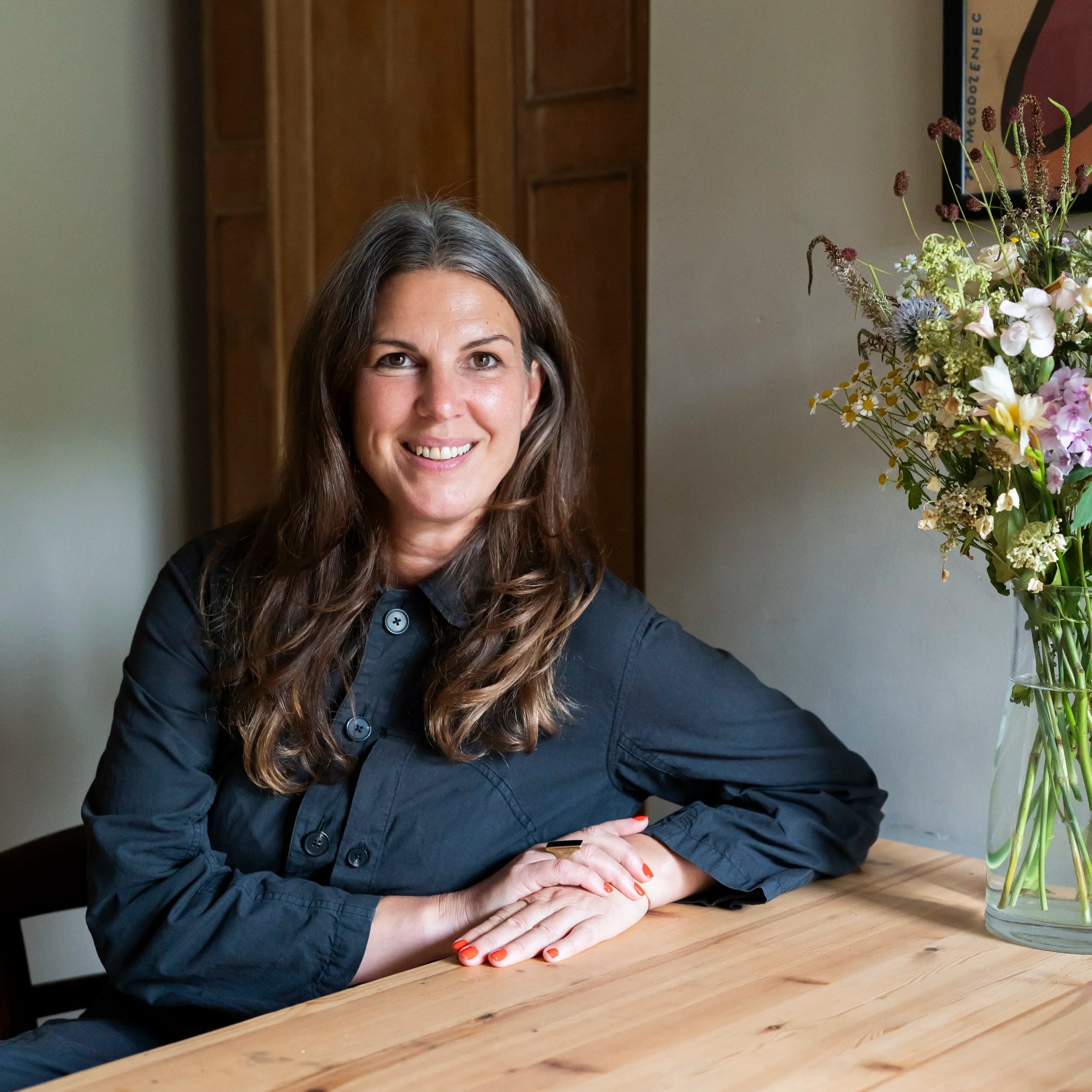
I understand what pressure can look like from the inside.
Before becoming a practitioner, I spent nearly 20 years working in global creative production, including seven years within Nike's European creative organisation.
I worked across demanding campaigns, teams, deadlines and high-pressure environments, alongside some of the world's biggest creative and cultural projects.
I know what it is to be responsible for a lot > but also not to lessen the load.
To keep things moving > and not rest.
To be capable when things are difficult > too capable!
To look like you're coping > but totally burnt out.
And to discover that being good at holding everything together doesn't necessarily mean you're unaffected by the pressure.
That experience continues to inform my work today.
I have a particular understanding of the emotional patterns that can sit underneath performance, responsibility, perfectionism, visibility, self-doubt and burnout.
You don't have to be falling apart to need support.
Sometimes the people who look like they're managing everything are carrying the most internally.
[More about Ruth →]
Working alongside other practitioners.
I also work with clients who have been referred by other practitioners.
Clinical EFT can provide complementary support where someone is experiencing significant anxiety, fear, stress, emotional distress or difficult experiences alongside their existing care. I welcome appropriate referrals from professionals including:
Psychologists · Psychotherapists · Psychiatrists · GPs · Chiropractors · Osteopaths · Physiotherapists · Bodyworkers · Complementary health practitioners
My role is complementary.
I don't diagnose medical or psychiatric conditions, prescribe medication or replace appropriate medical or psychological treatment. Where someone's needs fall outside my scope of practice, I refer appropriately.